1. What is the cost /value of an RV Clarity Inspection?
The general average of an RV inspection is going to be somewhere between $1,000 and $3,000 dollars, which is more closely related to the RV’s Age, Size, Complexity. It does not matter if it is a brand-new RV or a 10-year-old RV both are going to have issues, so really the main reason is the total size and the complexity of it. EXAMPLE: a 45-foot Class A Diesel Pusher with all the appliances (dishwasher, washer/dryer, vacuum, microwave, oven, stovetop) Solar package and other add-ons or extras is going to be more than a 35-foot Class C with the basics.
2. How long does the RV Clarity inspection take and when do I get the report?
A contract and an invoice + a copy of the Points of Inspection will be sent to client 2 business days prior to scheduled inspection, the contract will be signed, and invoice paid at least 24 hours prior to inspection. Roughly two hours of product research prior to day of inspection with 6 to 8 hours on site completing the physical inspection, then roughly 6 to 10 hours for the detailed report to be completed and sent to the client normally around 12 noon the day after the physical inspection.
3. What is included in an RV Clarity Inspection?
The Client will receive a detailed inspection report, with photos/videos along with explanations of the ratings and what is a Life Safety Issue, Major, Minor Issue or just a Noteworthy Comment and these will be backed up where applicable with measurable test results.
4. How is an RV Clarity Inspection different from a Dealership Pre-Delivery Inspection (PDI)?
An RV Clarity Inspection involves over 1,000 items that are either checked for the condition, and evaluated/tested for the operation that will list the measurable results and provide our customers with photos and videos in an extensive report that is provided to the customer vs. A PDI typically involves a 50–130+ point checklist covering exterior, interior, and mechanical components.
5. When should an RV Inspection be done in the Purchasing Process?
RV Clarity recommends that the inspection be completed prior to signing a contract and paying for the RV with the dealership/seller, this helps the purchaser to maintain the leverage and control to walk away from a lemon of a purchase.
6. Does the RV Inspector Drive the RV during the Inspection?
NO. The reason most RV inspectors won't get behind the wheel boils down to a fundamental divide between liability, licensing, and professional specialization.
If an inspector were to drive your potential $300,000 motorhome and get into even a minor fender bender, their Professional Liability insurance would likely deny the claim instantly, as these policies almost exclusively cover "errors and omissions" regarding the home's systems, not the operation of a motor vehicle. This creates a massive legal vacuum where neither the inspector’s nor the owner’s insurance wants to take the hit.
Furthermore, many of these rigs, especially the large Class A diesel pushers—exceed 26,000 lbs., which requires a specialized license in many states. Even if an inspector has the license, they are there as a "House" expert, not a chassis mechanic. They are trained to find a microscopic pinhole leak in your plumbing or a failure in your solar inverter; they aren't there to diagnose a slipping transmission or a worn steering box.
By staying stationary, they avoid the legal risks of a test drive and stay focused on the "home" components, leaving the mechanical "car" side of the evaluation to be specialized chassis technicians or the cold, hard data of a fluid analysis lab.
7. Does the RV Clarity Inspection include the Engine and Chassis?
RV Clarity, will perform a visual inspection of the engine and chassis, looking at fluid levels, and condition of the fluid, plus look for any obvious damage or fluid leaks. RV Clarity is not trained as an engine / chassis mechanic.
8. What specialized tools/equipment are used during the inspection?
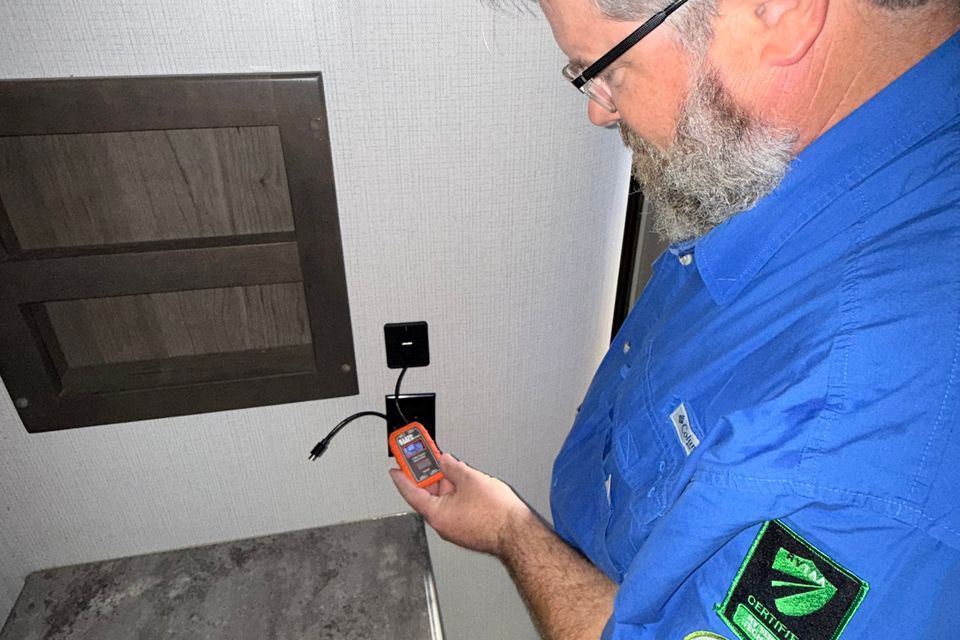
RV Clarity uses tools, like refractometer, multi-meter, BAL cable tensioner, Manometer, Anemometer, Cameras, Tablet, Inspection Software, Mut Ranger, USB-A/C meter, Polarity Tester and much more.
The general average of an RV inspection is going to be somewhere between $1,000 and $3,000 dollars, which is more closely related to the RV’s Age, Size, Complexity. It does not matter if it is a brand-new RV or a 10-year-old RV both are going to have issues, so really the main reason is the total size and the complexity of it. EXAMPLE: a 45-foot Class A Diesel Pusher with all the appliances (dishwasher, washer/dryer, vacuum, microwave, oven, stovetop) Solar package and other add-ons or extras is going to be more than a 35-foot Class C with the basics.
2. How long does the RV Clarity inspection take and when do I get the report?
A contract and an invoice + a copy of the Points of Inspection will be sent to client 2 business days prior to scheduled inspection, the contract will be signed, and invoice paid at least 24 hours prior to inspection. Roughly two hours of product research prior to day of inspection with 6 to 8 hours on site completing the physical inspection, then roughly 6 to 10 hours for the detailed report to be completed and sent to the client normally around 12 noon the day after the physical inspection.
3. What is included in an RV Clarity Inspection?
The Client will receive a detailed inspection report, with photos/videos along with explanations of the ratings and what is a Life Safety Issue, Major, Minor Issue or just a Noteworthy Comment and these will be backed up where applicable with measurable test results.
4. How is an RV Clarity Inspection different from a Dealership Pre-Delivery Inspection (PDI)?
An RV Clarity Inspection involves over 1,000 items that are either checked for the condition, and evaluated/tested for the operation that will list the measurable results and provide our customers with photos and videos in an extensive report that is provided to the customer vs. A PDI typically involves a 50–130+ point checklist covering exterior, interior, and mechanical components.
5. When should an RV Inspection be done in the Purchasing Process?
RV Clarity recommends that the inspection be completed prior to signing a contract and paying for the RV with the dealership/seller, this helps the purchaser to maintain the leverage and control to walk away from a lemon of a purchase.
6. Does the RV Inspector Drive the RV during the Inspection?
NO. The reason most RV inspectors won't get behind the wheel boils down to a fundamental divide between liability, licensing, and professional specialization.
If an inspector were to drive your potential $300,000 motorhome and get into even a minor fender bender, their Professional Liability insurance would likely deny the claim instantly, as these policies almost exclusively cover "errors and omissions" regarding the home's systems, not the operation of a motor vehicle. This creates a massive legal vacuum where neither the inspector’s nor the owner’s insurance wants to take the hit.
Furthermore, many of these rigs, especially the large Class A diesel pushers—exceed 26,000 lbs., which requires a specialized license in many states. Even if an inspector has the license, they are there as a "House" expert, not a chassis mechanic. They are trained to find a microscopic pinhole leak in your plumbing or a failure in your solar inverter; they aren't there to diagnose a slipping transmission or a worn steering box.
By staying stationary, they avoid the legal risks of a test drive and stay focused on the "home" components, leaving the mechanical "car" side of the evaluation to be specialized chassis technicians or the cold, hard data of a fluid analysis lab.
7. Does the RV Clarity Inspection include the Engine and Chassis?
RV Clarity, will perform a visual inspection of the engine and chassis, looking at fluid levels, and condition of the fluid, plus look for any obvious damage or fluid leaks. RV Clarity is not trained as an engine / chassis mechanic.
8. What specialized tools/equipment are used during the inspection?
RV Clarity uses tools, like refractometer, multi-meter, BAL cable tensioner, Manometer, Anemometer, Cameras, Tablet, Inspection Software, Mut Ranger, USB-A/C meter, Polarity Tester and much more.